
Top Payment Options for Seasonal Hospitality Businesses
Last Updated: October 25, 2026
Quick Summary
The top payment options for seasonal hospitality businesses include card machines with flexible rental terms, online payment gateways for deposits and bookings, integrated EPOS systems that manage payments alongside inventory, contactless payment options, and mobile payment solutions for pop-ups. Each option serves different needs depending on your venue type and peak-season volume.
74% of hoteliers now offer contactless payment options, making it essential rather than optional.
Hospitality payment revenue is projected to reach £473.2 billion by 2026, with 90% flowing through digital channels.
Venues using integrated payment systems reported 15-20% faster transaction times and significantly lower error rates than those using standalone terminals.
Online gateways typically cost 1.5-3% per transaction plus a small monthly fee, making them better than fixed costs for seasonal businesses.
Most EPOS systems for hospitality cost £30-100 per month plus transaction fees and should support offline mode and multi-location tracking.
Table of Contents
Why Payment Solutions Matter for Seasonal Hospitality Businesses
Quick Comparison of Payment Options
Card Machines for Small Businesses: What Works Year-Round
Understanding Payment Processing Fees in Hospitality
Online Payment Gateways for Deposits and Bookings
EPOS Systems for Hospitality: Integration and Cost Control
Getting Your Payment Setup Right Before Peak Season
Frequently Asked Questions
Why Payment Solutions Matter for Seasonal Hospitality Businesses
Seasonal hospitality businesses face a unique cash-flow challenge. Revenue spikes during peak months, then drops sharply during quiet periods. Your payment infrastructure needs to handle both extremes without breaking your budget.
The stakes are high. According to Elavon's 2022 hospitality payment trends analysis, hospitality payment revenue is projected to reach £473.2 billion by 2026, with £376.8 billion generated online. That's 90% of all revenue flowing through digital payment channels.
Here's what most hospitality owners get wrong: they focus on finding the cheapest payment processor without asking whether that processor actually fits their seasonal pattern. A solution optimised for year-round restaurants doesn't work for summer-only beach bars. You need payment infrastructure that scales with your business, not against it.
At Switch4Profit, we've spent over 30 years helping independent hospitality operators like yours find the right payment setup.
Below, we'll walk you through the top payment options for seasonal hospitality businesses, explain how fees work, and show you which solutions actually fit your cash-flow pattern.
Quick Comparison of Payment Options
Payment Option | Best For | Key Advantage | Primary Cost |
Card machines (physical terminals) | Walk-in customers, cash-heavy venues | Immediate settlement, no internet dependency | Per-transaction fees (0.5-2.5%) |
Online payment gateways | Deposits, advance bookings, remote payments | Lower fees for online transactions, recurring billing | Per-transaction fees (1.5-3%) + monthly subscription |
Integrated EPOS systems | Full venue management | One platform for payments, inventory, bookings | Monthly subscription + transaction fees |
Contactless payment options | High-volume, quick-service venues | Faster checkouts, reduced cash handling | Embedded in terminal fees |
Mobile payment solutions | Outdoor events, seasonal pop-ups | Flexibility, no fixed location required | Per-transaction fees (2-3%) + device rental |
Card Machines for Small Businesses: What Works Year-Round
Physical card terminals remain the backbone of hospitality payment processing. The reason is simple: they work everywhere, don't depend on flaky WiFi, and customers expect them.
For seasonal businesses, card machines solve a specific problem. During peak season, you need terminals that handle high transaction volume without slowing down. During quiet months, you need the flexibility to reduce your terminal rental costs or shift terminals between locations.

According to Hotel Tech Report's 2026 hospitality statistics, 74% of hoteliers now offer contactless payment options. That's not a luxury, it's table stakes. If your card machine doesn't support contactless, you're losing customers to competitors who do.
The key features to look for in a card machine for seasonal businesses:
Flexible rental terms. Avoid long-term contracts that penalise you for reducing terminals during off-season. Look for month-to-month arrangements or seasonal pause options.
Multiple payment types. Chip and PIN, contactless, mobile wallets (Apple Pay, Google Pay), and ideally QR code payments.
Offline capability. If your internet drops during service, the terminal should still process payments and sync when connection returns.
Integration with your EPOS. A standalone terminal is fine, but one that talks directly to your booking and inventory system saves hours of admin each week.
We recommend reviewing your current card machine contract. If you're locked into an unfair rate, Taking Payments can help you exit your current agreement.
Understanding Payment Processing Fees in Hospitality
This is where most hospitality businesses leak money without realising it.
Payment processing fees come in several layers, and most providers hide the true cost by bundling them.
For seasonal businesses, this matters even more. During quiet months, you might process fewer transactions, which can push you below minimum monthly thresholds and trigger penalty charges.
Here's the structure you should understand:
Interchange fees. These are set by Visa and Mastercard, not your provider. They vary by card type (credit vs. debit, domestic vs. international) and industry. Hospitality typically sits at 0.6-2.0% depending on the payment method.
Scheme fees. Visa and Mastercard charge a small percentage on top of interchange. This is roughly 0.1-0.3% and non-negotiable.
Processor margin. This is where your provider makes money. Competitive processors take 0.3-0.8% on top of interchange and scheme fees. Expensive ones take 1.5-3%.
Gateway fees. If you're taking online payments, you'll pay a separate gateway fee (typically £10-30 per month) to process card details securely.
Monthly minimums and hidden charges. This is the trap. Some providers charge £20-50 per month even if you process nothing.
The way to cut through this: Reduce Card Machine Transaction Costs: A 2026 Guide breaks down exactly which fees are negotiable and which ones aren't.
Online Payment Gateways for Deposits and Bookings
Online payment gateways serve a different purpose than card machines. They're designed for payments you take before the customer arrives: deposits, advance bookings, and remote transactions.
For seasonal hospitality businesses, this is critical. During peak season, you want to take deposits upfront to secure bookings and improve cash flow. A good online gateway makes this seamless for customers and reduces no-shows.
The best gateways for hospitality let customers pay directly from your booking confirmation email, your website, or even Google Search results. They handle recurring payments (useful for loyalty schemes or subscription packages), and they settle funds quickly, ideally within 24 hours.
Restaurant Bookings Solution integrates booking management with online payments, so customers can reserve a table and pay a deposit in one flow.
When evaluating online gateways, compare these features:
Settlement speed. Next-day settlement is standard; same-day is better for cash flow.
Recurring payment support. Essential if you offer advance bookings or loyalty packages.
Mobile-friendly checkout. Most customers pay on phones.
PCI compliance included. The gateway should handle security, not you.
Refund management. You should be able to issue refunds instantly from your dashboard, not email the processor.
Online gateways typically cost 1.5-3% per transaction plus a small monthly fee (£0-20). For seasonal businesses, the transaction-based model is better than a fixed monthly cost, since you only pay when you take money.
EPOS Systems for Hospitality: Integration and Cost Control
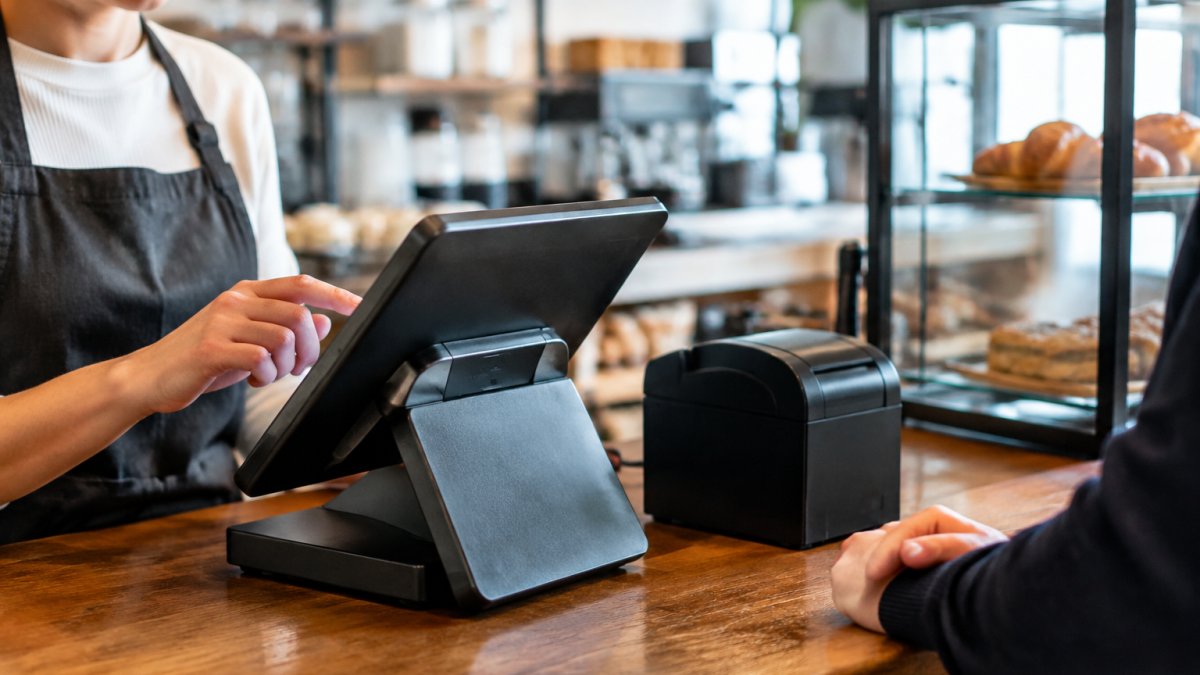
An EPOS system is where payment processing, inventory, staff management, and customer data converge. For seasonal hospitality businesses, this integration is what separates profitable operations from chaotic ones.
The problem with standalone payment systems is that they don't talk to your other tools. You process a payment on a terminal, manually log it in your EPOS, then reconcile it again in your accounting software.
A truly integrated EPOS system handles this automatically. Payment comes in, inventory updates instantly, the transaction posts to your accounts, and your staff scheduling adjusts based on actual revenue.
Wang et al.'s 2025 systematic literature review on payment methods examined payment trends across hospitality from 2013 to 2023 and found that venues using integrated payment systems reported 15-20% faster transaction times and significantly lower error rates compared to those using standalone terminals.
When selecting an EPOS system for seasonal use, prioritise these features:
Flexible user accounts. You should be able to add and remove staff accounts instantly, not wait for a technician. During peak season, you hire quickly; during off-season, you need to deactivate accounts.
Inventory tracking by season. Track which menu items sell during peak vs. quiet periods, so you can adjust purchasing and reduce waste.
Multi-location support. If you run more than one venue or pop-up location, the EPOS should sync inventory and sales across all of them.
Offline mode. If your internet drops, the system should keep working and sync when connection returns.
Reporting by period. You need to compare peak-season performance to off-season, so the EPOS should let you filter reports by date range and location.
Integrated Booking and EPOS Systems: 2026 Guide walks through how to evaluate EPOS systems specifically for seasonal hospitality. It covers integration with booking platforms (so deposits feed directly into your EPOS), accounting software, and staff management tools.
Most EPOS systems for hospitality cost £30-100 per month plus transaction fees.
Getting Your Payment Setup Right Before Peak Season
This is the section that matters most if you're reading in September or October. Peak season is six to eight weeks away, and your payment infrastructure needs to be locked in now.
The biggest mistake hospitality owners make is waiting until peak season arrives, then realising their payment system can't handle the volume. You're in the middle of a rush, customers are queuing, and your card machine is timing out. By then, it's too late to switch.
Here's the checklist for getting your setup right:
Audit your current fees. Pull your last three months of statements from your card machine provider and your online gateway. Add up every charge: per-transaction fees, monthly fees, gateway fees, PCI fees, early termination penalties. Calculate your effective cost as a percentage of revenue.
Test your payment infrastructure under load. During a quiet service, simulate peak-season volume. Process 50+ transactions in rapid succession. Does your card machine keep up? Does your EPOS sync correctly? Do you get settlement confirmations? If anything slows down or fails, you'll discover it now, not during a Friday night rush.
Check your integration points. If you use a booking system, EPOS, and accounting software, make sure they all talk to each other. A payment should flow from your terminal → EPOS → accounting without manual re-entry. If you're still doing manual data entry, you're losing hours every week.
Review your contract terms. How much notice do you need to give if you want to reduce terminals during off-season? Are there early termination fees? Can you pause your service without losing your rate? Most providers will negotiate these terms if you ask, but only before you sign.
Plan for staffing. If you're hiring seasonal staff, make sure they know how to use your payment system. Poorly trained staff slow down service and make mistakes. Get free expert advice today for a personalised walkthrough of your payment setup, including staff training.
The right payment solution for a seasonal hospitality business isn't the cheapest one.
Switch4Profit helps independent hospitality owners cut their payment processing costs while improving their customer experience. We refund exit fees up to £3,000 if you're locked into an unfair contract, and we handle installation, training, and support at no extra cost.
Frequently Asked Questions
What payment methods should a seasonal hospitality business accept?
Seasonal businesses should prioritise contactless cards, chip and PIN, and mobile payments. Research shows 74% of hoteliers offer contactless options, reflecting customer demand. For online bookings and deposits, add a payment gateway supporting cards and digital wallets. Accepting multiple methods reduces transaction friction during busy periods and accommodates guest preferences without requiring staff to handle cash as frequently.
How can payment processing fees impact a seasonal business's cash flow?
Payment processing fees compound quickly during peak trading periods. A seasonal business handling high transaction volumes over a short window pays more in total fees than year-round competitors. Reviewing your card machine contract and payment gateway rates before peak season can save hundreds of pounds. Switch4Profit's independent contract reviews identify hidden charges, ensuring more revenue stays in your business when you need it most.
What is the difference between a payment gateway and a card machine?
A card machine processes in-person payments at your counter or table. A payment gateway handles online transactions for bookings, deposits, and remote payments. Seasonal businesses typically need both: a reliable card machine for walk-in trade and a gateway for advance bookings. Some providers bundle both services; others require separate contracts. Integration between the two systems simplifies reporting and cash reconciliation.
Can a seasonal business pause or adjust its payment setup during off-season?
Most card machine contracts lock you in year-round, even if you're closed. This is where contract terms matter. Some providers allow seasonal pause agreements; others charge monthly fees regardless of trading. Before committing, clarify whether you can suspend services without penalty during closure periods. Switch4Profit's free contract review identifies these clauses and can help negotiate flexibility tailored to your trading calendar.
GET MY FREE BUSINESS COST REVIEW
Add switch4profit.co.uk as a preferred source on Google →


Comments