
7 Top Payment Systems for Independent Guest Houses
Last Updated: 29 October 2026
Quick Summary
The best payment systems for independent guest houses are those that integrate with your existing software, keep total costs low and remove daily admin. Compare every fee, including terminal rental, gateway charges and exit fees, before choosing.
Map every charge you pay onto one monthly figure, then compare providers like for like.
Prefer a standalone processor if you expect to change booking software later.
Check that your terminal accepts virtual cards for OTA bookings and contactless payments.
Put deposit, cancellation and no-show terms in the booking confirmation itself.
Check exit clauses and minimum terms before signing any contract.
Table of Contents
Why Payment Systems Matter for Independent Guest Houses
Choosing the right payment systems for independent guest houses affects far more than the card machine on your desk. It shapes how guests book, how deposits are taken, how fees eat into your margin, and how much admin lands on your team each week.
Payment choice is a business decision. Industry guidance increasingly tells hotels to offer several methods, including cards, digital wallets, contactless payments and virtual credit cards Cloudbeds guide to hotel payment processing systems.
Our view is that a guest house should judge a payment system on three things: total cost, how well it fits the systems you already run, and how much daily work it removes. The rest of this guide applies those tests to the options most independent operators consider.
What to Look for in a Hotel Payment Gateway
A payment gateway passes card details securely from your booking channel to the bank that processes the transaction.
Start with integration. Providers such as ChargeAutomation say their platform works with more than 130 payment gateways, including Stripe and Adyen, so you can keep your current gateway while adding automation ChargeAutomation guide to choosing a hotel payment gateway.
Next, check the automation features. Hotel payment products are often marketed around automating deposits, refunds and guest verification Guesty payment product overview. For a small team, these functions often matter more than a headline feature list.
Finally, look at security. Payment security, chargebacks and fraud protection should be part of the decision, not an afterthought.
Comparing Hospitality Payment Processing Fees
Fees are where many guest houses lose money without noticing. Processing charges, terminal rental, gateway fees, PCI compliance fees and exit fees all add up, and the headline rate rarely tells the full story. The useful exercise for an independent guest house is to map every charge you actually pay onto a single monthly figure and compare like with like.
The charge types to total up
Work through your last three months of statements and separate the charges into these buckets:
Transaction fees, the percentage and fixed pence amount taken per card payment, which differ between consumer cards, commercial cards and premium credit cards.
Terminal or hardware rental, a monthly charge per terminal, sometimes bundled into a minimum monthly service charge.
Gateway fees, a per-transaction or monthly charge for the online payment gateway that sits between your booking page and the acquirer.
Add those together for a typical month, then divide by the number of card transactions to get a true cost per booking. A provider with a low headline rate can still cost more once terminal rental, gateway charges and PCI fees are included.
UK settlement and reporting considerations
Settlement timing matters for cash flow. Settlement timing varies by provider, and weekend and bank holiday cut-offs can push a Friday or Saturday night's takings into the following week.
For VAT, card takings are part of your taxable turnover and must be reflected in your records.
Check the provider's data processing terms and where they store data. Confirm whether the provider can evidence PCI DSS compliance, and check whether they support Strong Customer Authentication (SCA) for online card payments.
Exit fees and contract terms
Exit fees deserve particular attention. Many operators are tied into contracts they did not fully understand. Switch4Profit offers a refund of exit fees from current providers of up to £3k, and reviews contracts independently so you can see what you actually pay before you switch. Compare free terminal options if you are considering a move. Pricing for every provider depends on your volumes and setup, so we recommend asking each one for a written quote rather than relying on published figures.
Watch Out A contract that looks cheap at signup can carry long minimum terms, so check the exit clause before you sign anything. Ask specifically for the minimum term, the notice period and the early-termination charge in writing.
A practical comparison method
Rather than comparing headline percentages, build a simple spreadsheet with one column per provider and one row per charge type above. Enter the quoted figures for the same monthly transaction volume and average transaction value, then add a column for the exit fee. The provider with the lowest total cost over a 12-month term, not the lowest headline rate, is usually the right answer for a small property.
Top Payment Systems for Guest Houses Compared
Payment options for guest houses fall into two broad groups: systems built into your property management software, and standalone or general-purpose processors. Below is a summary of the providers we looked at, based on the information they publish.
Provider | Type | Published pricing | Best for |
Stayntouch Pay | Embedded in PMS | Contact for pricing | Guest houses using Stayntouch |
Cloudbeds Payments | Embedded in PMS | Contact for pricing | Guest houses using Cloudbeds |
roommaster | Hotel gateway guide | Contact for pricing | Assessing gateways alongside PMS fit |
ChargeAutomation | Gateway and automation | Contact for pricing | Broad payment options and automation |
Mews Payments | Hotel payment tool | Contact for pricing | Flexible guest payment choices |
Planet | Payment provider | Not stated | Hotel-focused card payments |
Stripe | Processor and gateway | Not stated | General-purpose processing |
Adyen | Payment provider | Not stated | Hotel and online processing |
INNsight Pay | Standalone platform | Contact for pricing | Independent accommodation businesses |
Integrated PMS Payment Options
Integrated options keep payments inside the software you already use for reservations.
The advantage is a single workflow. The drawback is that you are tied to that software. Check whether the payment fees and supported payment methods are stated before you commit, because the sources we reviewed did not publish them.
Standalone and General-Purpose Processors
Standalone platforms and general processors offer more freedom if you change booking software later.
Our recommendation: if you expect to change booking software, prefer a standalone processor. If your PMS already does what you need, the integrated route usually costs less in admin time.
Online Booking Payment Solutions and Deposits
Deposits are where online booking and payments meet, and for an independent guest house the workflow differs sharply depending on whether the booking came direct or through an online travel agency (OTA). Most competitor guides treat deposits as a single feature; the practical reality is that you need a different process for each channel, and the payment system has to support both without doubling your admin.
Direct bookings: deposits and pre-authorisations
For direct bookings, you control the payment terms. The two common mechanisms are:
A deposit taken at the point of booking, a fixed amount or a percentage of the total, charged to the guest's card immediately. This reduces no-shows but creates refund work if the guest cancels within policy.
A pre-authorisation on the card, a hold placed on the guest's card without taking the money, released or captured later. Pre-authorisations are useful for incidentals and for securing a booking without charging the guest upfront, but they expire (typically after a set number of days) and need to be managed so they do not lapse before arrival.
Look for a booking solution that lets guests pay a deposit directly from your own booking page, with automatic refunds when a booking is cancelled within your policy. The better tools automate deposits, refunds and guest verification, so your staff are not chasing payments by hand Guesty payment product overview.
OTA bookings: virtual cards and channel-specific rules
Bookings that arrive through an OTA usually come with a virtual credit card rather than the guest's own card details. The OTA issues a one-time card number that your terminal or gateway charges according to the OTA's rules, often at a set point before arrival, or on the day of arrival. Two things matter here:
Your terminal or gateway must accept virtual cards. Not every terminal does, and a terminal that declines virtual cards will leave you unable to collect OTA payments.
The charge timing is set by the OTA, not by you. Charging too early or too late can result in a declined virtual card and a lost payment, so check the OTA's rules for each rate plan you sell.
Cancellations, refunds and no-shows
Keep your cancellation policy visible at checkout. A deposit that guests did not see coming generates disputes and chargebacks, which cost time and money.
Refunds are the other side of the same coin. A refund to a card can take several working days to reach the guest, so set expectations in your confirmation email. If you take deposits by bank transfer as well as card, make sure your reconciliation process captures both, or your accounts will drift.
Pro Tip Write your deposit, cancellation and no-show terms into the booking confirmation itself, not just the website. Guests who see the terms at the point of payment are far less likely to dispute a charge later.
Matching the workflow to your property
A small guest house with limited staffing benefits most from a system that automates the deposit and refund steps and accepts both consumer cards and OTA virtual cards on the same terminal. If you take most bookings direct, a gateway with automated deposit collection and refunds will save the most admin time. If most of your bookings come through OTAs, prioritise virtual card acceptance and clear charge-timing rules over deposit automation.
Contactless Payments for Guest Houses
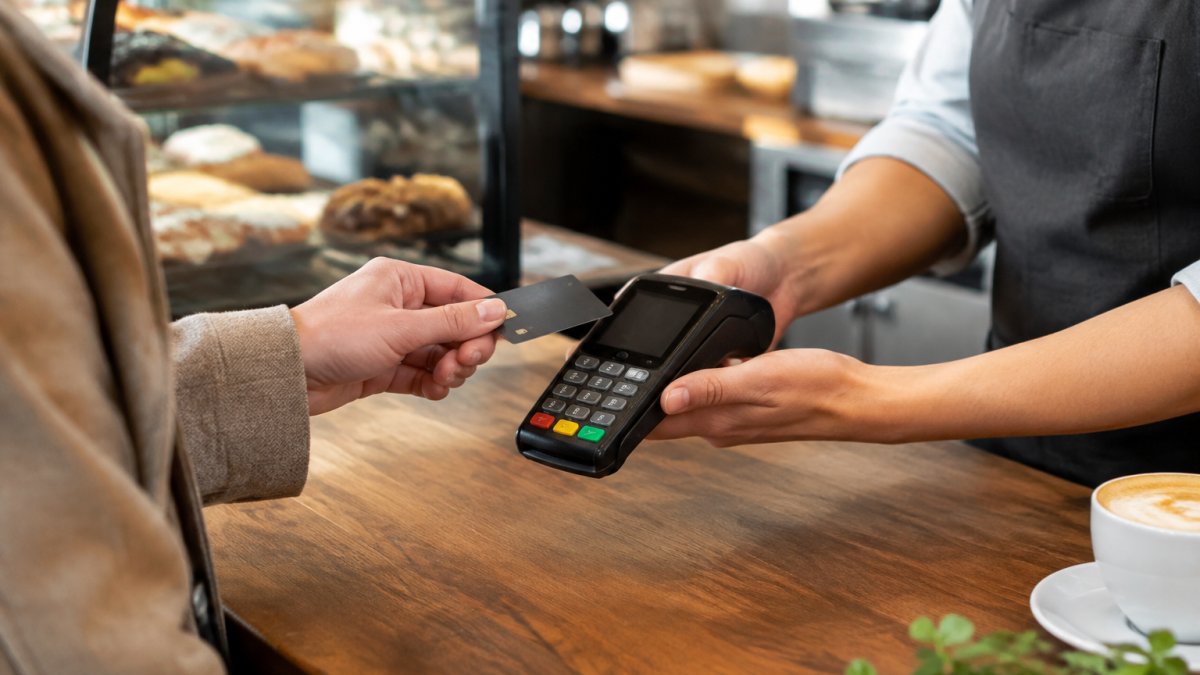
Contactless acceptance is now an expectation rather than a perk. Guests arrive with cards and phones ready, and a terminal that only takes chip and PIN slows check-in at the desk.

Make sure your terminal and gateway accept contactless cards and mobile wallets. Test the process with a real transaction before a busy weekend. A reception that can take payment in under a minute protects both the guest experience and your staff's time.
Booking Your Free Business Cost Review
Choosing among these systems is easier when you know your real costs. Switch4Profit offers a free expert advisory service with no service fees, covering your current card machine, processing charges and contracts.
If you want to see what your fees really are, book a free business cost review and we will go through your statements with you.
If you are weighing up whether your fees can be reduced, our guide on whether merchant account fees are negotiable is a good place to start. For a closer look at the hardware side, see our Dojo card terminal offer.
Frequently Asked Questions
What is the best payment system for a guest house?
The best payment system depends on whether you already run a property management system, how many bookings you take directly and which payment methods your guests use. Guest houses already using an integrated PMS often benefit from payments built into that software, because bookings, deposits and refunds stay in one place. Operators without a PMS may prefer a standalone platform that connects to their booking channels. Compare the total cost, including per-transaction fees, monthly charges and terminal hire, before deciding. Switch4Profit can review your current setup and fees at no service charge.
How do guest houses take payments for bookings?
Guest houses usually take payments in three ways: card details taken at booking through a payment link, online payments through their own website or booking engine, and card or contactless payments at check-in and check-out. Many operators collect a deposit when a reservation is made and settle the balance on arrival. A payment gateway passes these transactions to the card network and back to your bank account. Setting up deposit rules and refund steps in advance reduces admin during busy periods.
Can a guest house take deposits online?
Yes. Most integrated payment systems let guest houses request a deposit or pre-authorisation when a booking is made online, then charge or release it according to your cancellation policy. Automating these steps reduces manual follow-up and the risk of forgotten balances. Check how a provider handles refunds, chargebacks and reporting before you commit, as these affect cash flow and bookkeeping. Ask providers to show you the deposit workflow on a test booking.
Do guest houses need a payment gateway?
Most guest houses that take card payments online need a payment gateway, which securely transmits card data from your website or booking system to the processor. Some all-in-one PMS platforms include a gateway within their payment offering, so you may not need to arrange one separately. Standalone gateways can be useful if you want to keep your current processor while adding automation. Whichever route you choose, confirm the fees, supported payment methods and PCI compliance responsibilities with the provider.


Comments